
K
Kapoho Kīpuka
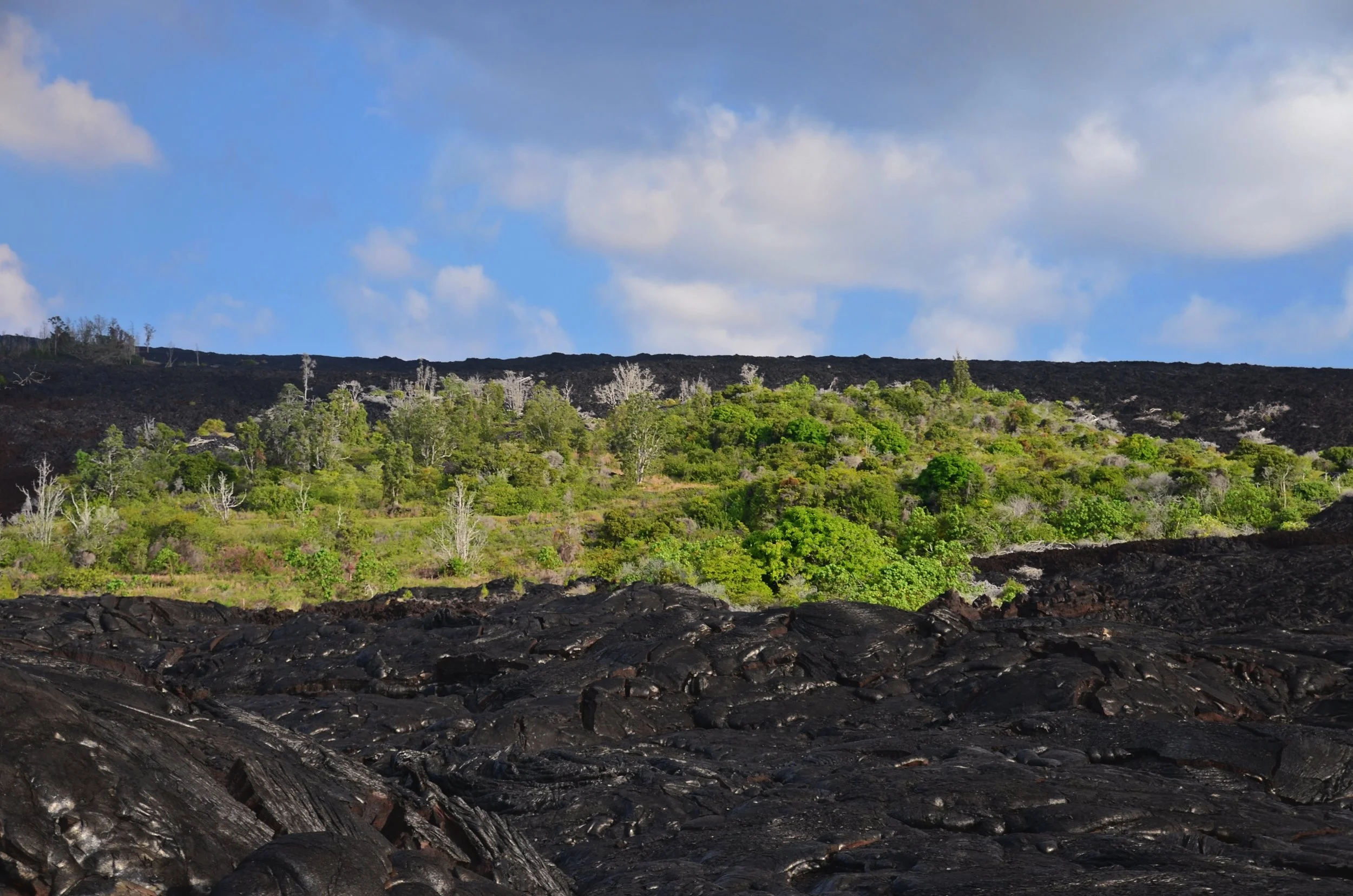
Kīpuka
A kīpuka is an area of land that is surrounded by younger lava flows, in effect an island within a sea of lava. Literally translated, the Hawaiian word signifies a variation, or change of form.
Kapoho kīpuka refers to land in the Kapoho area of Hawaii that remained as an island of older land during the devastating 2018 Kīlauea eruption that buried much of the surrounding town and landscape.
Kīpukas are natural features where lava flows branch around existing hills or land, creating unique ecological pockets or oases that show the older landscape amidst the new lava.
Kau Kau
In Hawaiian Pidgin, kau kau (also written kaukau) means food or to eat/drink. The phrase comes from plantation-era language mixing—especially contact with Chinese—and became a common Pidgin term across Hawaii.
Example usage: "Time fo' kau kau!" (Time to eat!) or "Let's go kau kau" (Let's go eat).
The standard Hawaiian word for food is 'ai, which also means to eat. Use "kau kau" in casual Pidgin speech about meals; use 'ai for the Hawaiian-language term.
Kumu
In Hawaiian, kumu has multiple deep meanings, primarily teacher, source, foundation, or model, representing someone who imparts knowledge or the origin of something, like a tree stump or the beginning of an idea. It's used for educators (kumu hula, kumu kula), but also means a source, reason, or base (like the bottom of a tree), and even a type of fish (goatfish) or a herd/flock.
Key Meanings of Kumu:
Teacher/Tutor: A respected instructor, especially in Hawaiian culture (e.g., kumu hula, hula teacher).
Source/Foundation: The origin, base, or producing cause (e.g., kumu of a tree, kumu of waves).
Model/Pattern: An example or copy (e.g., kumu hoʻohālike).
Beginning/Reason: The starting point or purpose (e.g., kumu no ka ʻoki male, reason for divorce).
Object: A price, a herd, a flock, or even a type of fish (kūmū).
