
Our Vision
We envision ʻĀina Iki Ranch as a place where sanctuary, stewardship, food cultivation, and community are not separate pursuits, but parts of the same relationship with the land.
A place where animals are valued beyond what they produce. Where food is grown with care for the soil that sustains it. Where practical knowledge is shared freely, and where people can reconnect with the rhythms of the natural world—and with one another.
We believe that caring for a small piece of land with intention can ripple outward: nourishing animals, people, community, and the ʻāina itself.
Little land can still make a meaningful difference.
Where It Began
Long before ʻĀina Iki Ranch became the working farm-ranch and sanctuary it is today, its foundation was rooted in a vision of living more closely with the Earth—learning from nature, cultivating food responsibly, conserving resources, building community, and treating the lives with whom we share this planet with compassion.
That vision was articulated by AIR founder Valerie Barber and continues to shape the work unfolding here today.
In Val’s words:
“Time-honored skills and awareness for living closely in harmony with Gaia are essential. Skills developed in Nature’s working classrooms are invaluable in creating resourceful community, ethical and healthy food production, natural resource conservation and regeneration, and compassionate relationships with the bio-diverse populations with whom Humans share the planet.”
Where We Are Rooted
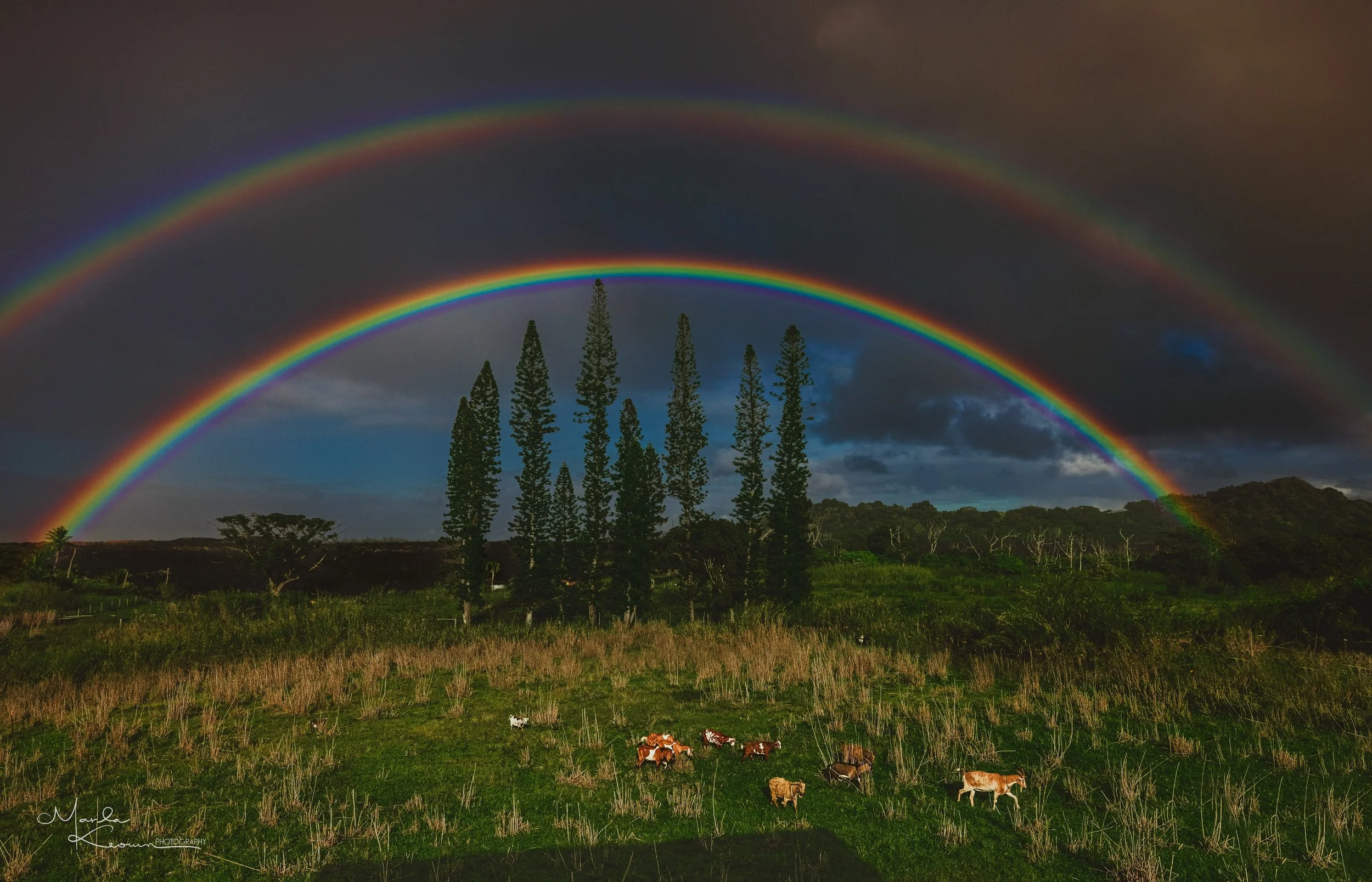
ʻĀina Iki Ranch sits within the Kapoho kīpuka in Puna, on the eastern edge of Hawaiʻi Island—a living landscape shaped and reshaped by Kīlauea.
Our little piece of ʻāina lies within a triangle formed by Hale Kamahina, Kapoho Crater, and Cape Kumukahi, surrounded by ancient lava flows, abundant rainfall, and fertile soil. The 2018 Kīlauea eruption transformed the surrounding area once again, making renewal and regeneration part of the landscape itself.
The ranch also sits near 19.5° north latitude, a latitude that holds spiritual significance for some. Whether understood through geology, spirituality, or simply the experience of living here, we feel deeply connected to this land—and responsible for how we care for it.