
Twenty Years in the Making
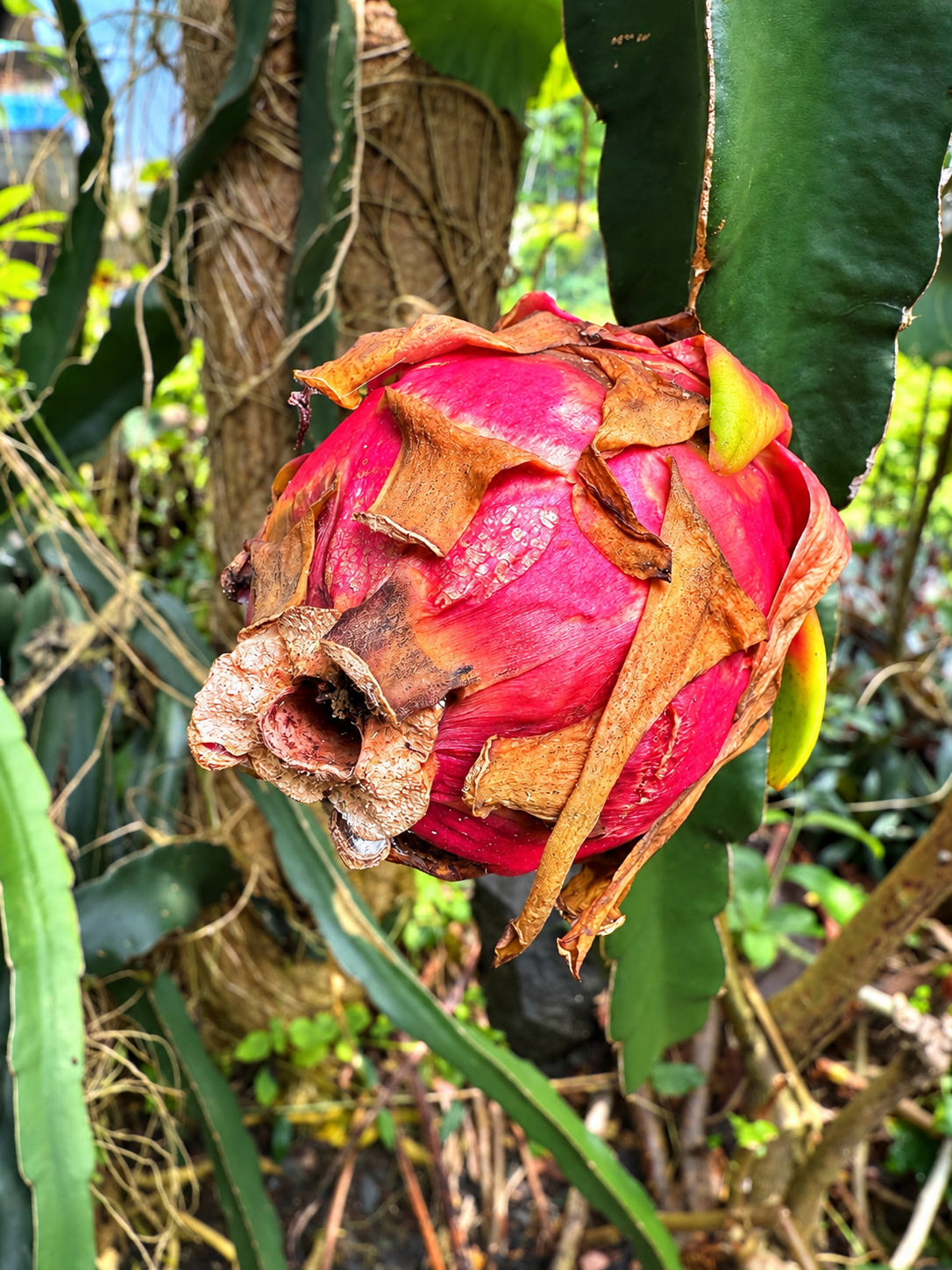
This week, we harvested the very first dragon fruit ever produced by an old, sprawling cactus tucked into the jungle (aka our garden around the water catchment) here at ʻĀina Iki Ranch.
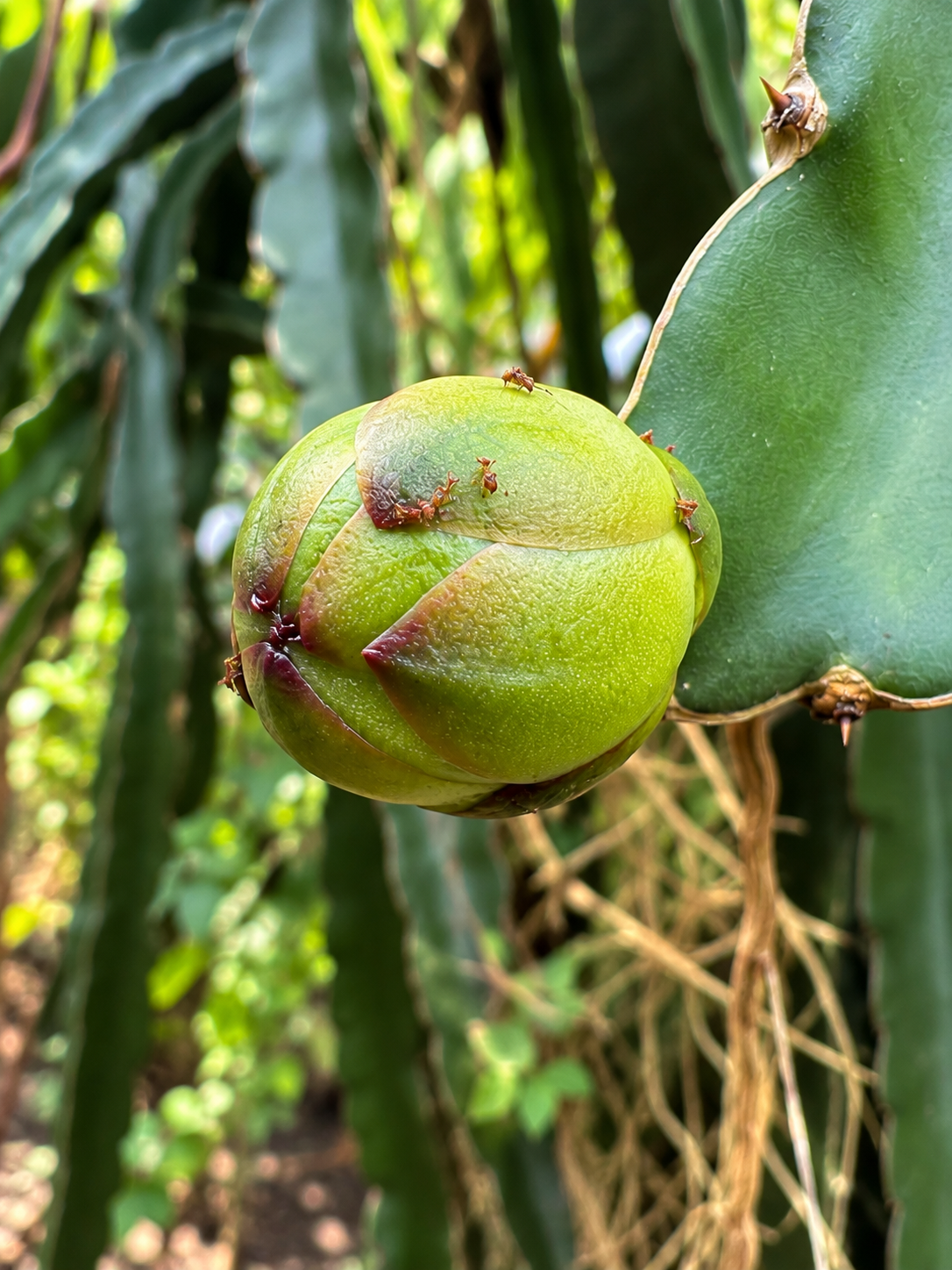
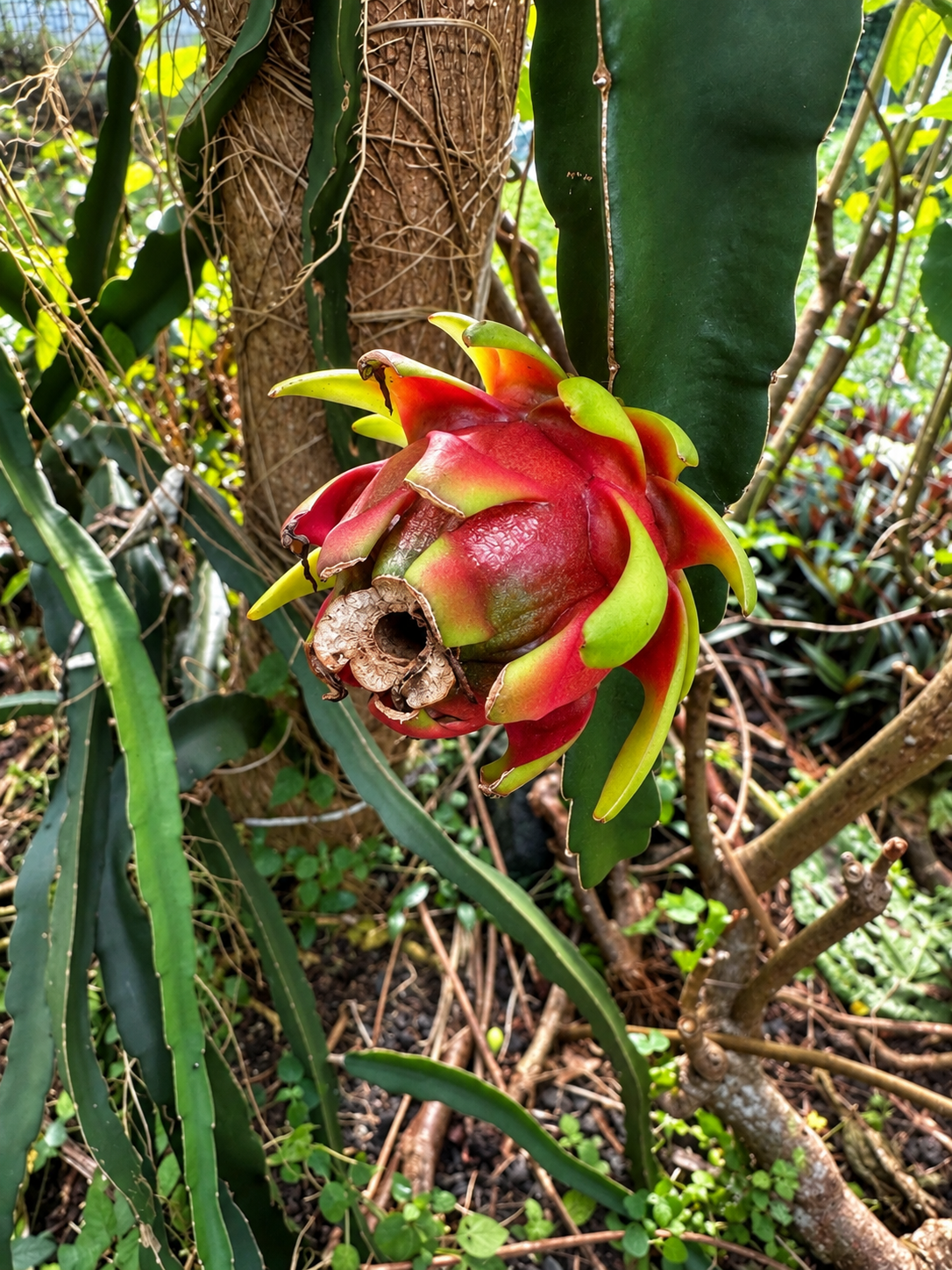
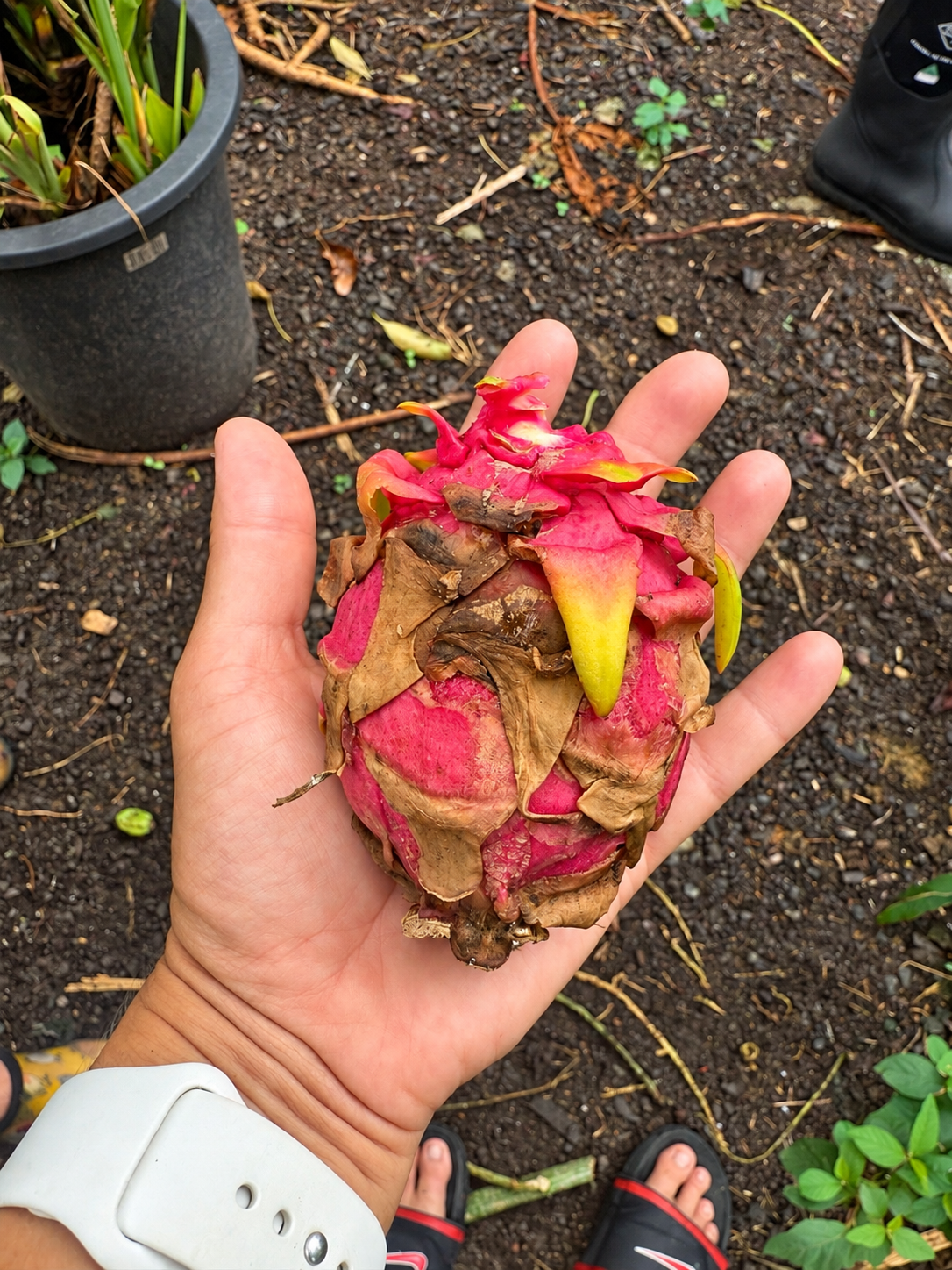
We had already celebrated spotting a bud and then a first flower, then watched as a little green fruit appeared beneath the remains of that enormous bloom. Over the weeks that followed, it grew plumper and slowly transformed from green to a brilliant pink-red. When it finally looked ready, we picked it, carried it inside and sat down with Val to learn where exactly this giant, snaking plant had come from.
Turns out, this particular piece of ʻĀina Iki history started about twenty years ago with a broken piece of cactus less than a foot long.
And as Val put it, we might as well call this one “truly slow food.”
A Cutting from a Friend
Around 2005 or 2006, Val was visiting her friend Greg, who had a dragon fruit farm near Lava Tree State Monument here in Puna. She remembers the property looking very different then, surrounded by vegetation and jungle, with quite a bit of acreage devoted to dragon fruit that Greg had established through a tremendous amount of physical labor.
The plants were trained up posts throughout the farm, and while Val and Greg were walking among them one day, she noticed that a small piece had broken off one of the plants. It was only about eight or ten inches long.
Val picked it up and asked, “Greg, would you care if I took this?”
“Okay, you take it.”
And with that, the future mother of ʻĀina Iki's first dragon fruit came home with her.
The Long Way Around
Val originally planted the cutting near the front of the property, in an area that was mostly riprap rock at the time. She thought the dragon fruit might happily grow among the rocks, but weeds kept invading the area, so eventually she pulled it back out and put it into a pot.
And there it waited.
The potted cactus spent some time elsewhere on the property while Val kept thinking, Well, I'm going to do something with that eventually. Eventually it came back to this part of the ranch, found its way into the ground and, after years of being shuffled around, apparently decided it was finally home.
To be clear, dragon fruit propagated from cuttings can normally begin producing fruit within only a couple of years under good growing conditions. Twenty years is most definitely not the standard timeline.
Val knows this.
“It doesn't take 20 years to do this unless you make this plant suffer,” she laughed.
Eight Inches Becomes Fifteen Feet
Despite its less-than-ideal start in life, that little cutting survived. Today it has become an enormous climbing cactus woven through the vegetation behind the house. What began as a piece perhaps eight inches long now stretches an estimated 15 feet in places, climbing upward, draping back down and winding its way through anything willing to support it.
Trying to describe its growth habit, Val eventually settled on “snaky and octopussy.”
There really isn't a more accurate description.
Dragon fruit is a climbing cactus by nature, using trees and other structures for support as its long, fleshy stems make their way upward. So although ours looks a little wild, its sprawling habit is very much what the plant wants to do.
For nearly two decades, though, all of that growth had produced exactly zero dragon fruits.
Then, this year, something changed.
The First Flower
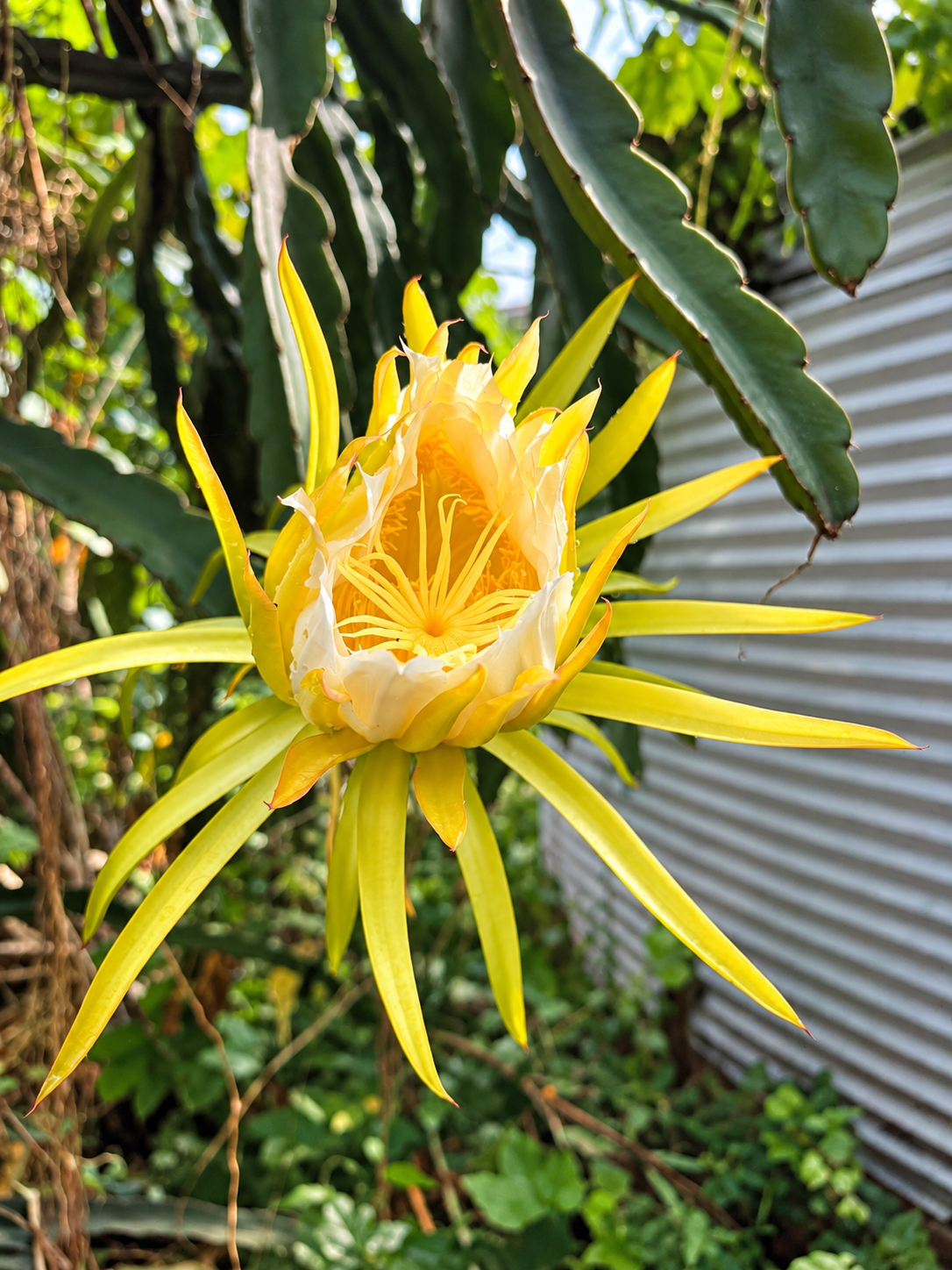
For the first time anyone could remember, the old cactus produced a flower.
And dragon fruit doesn't do flowers halfway. Its enormous blooms open primarily at night, putting on a spectacular but short-lived show. We watched ours bloom for the first time, and after the flower faded, the base remained green and began to swell.
We had a fruit.
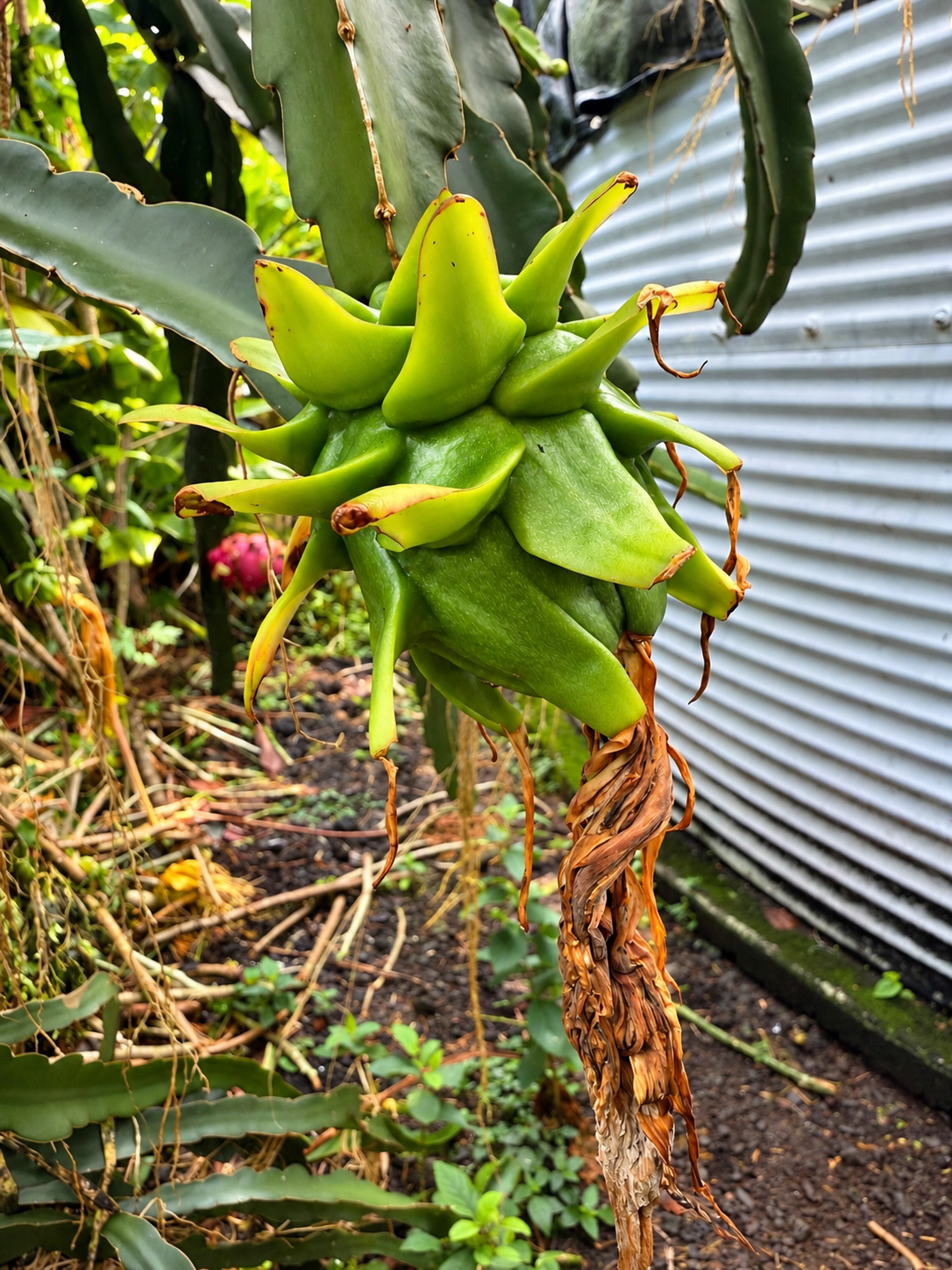
At first it didn't look much like the dragon fruit you'd recognize from a grocery store. It was green, with long fleshy bracts sticking out in every direction and the shriveled remains of the flower dangling from its end. But over time it grew rounder and larger, and then the color began to change.
Green became pink. Pink became a nearly fluorescent red.
After roughly twenty years, this ridiculous old cactus was finally ready to feed somebody.
The First Taste
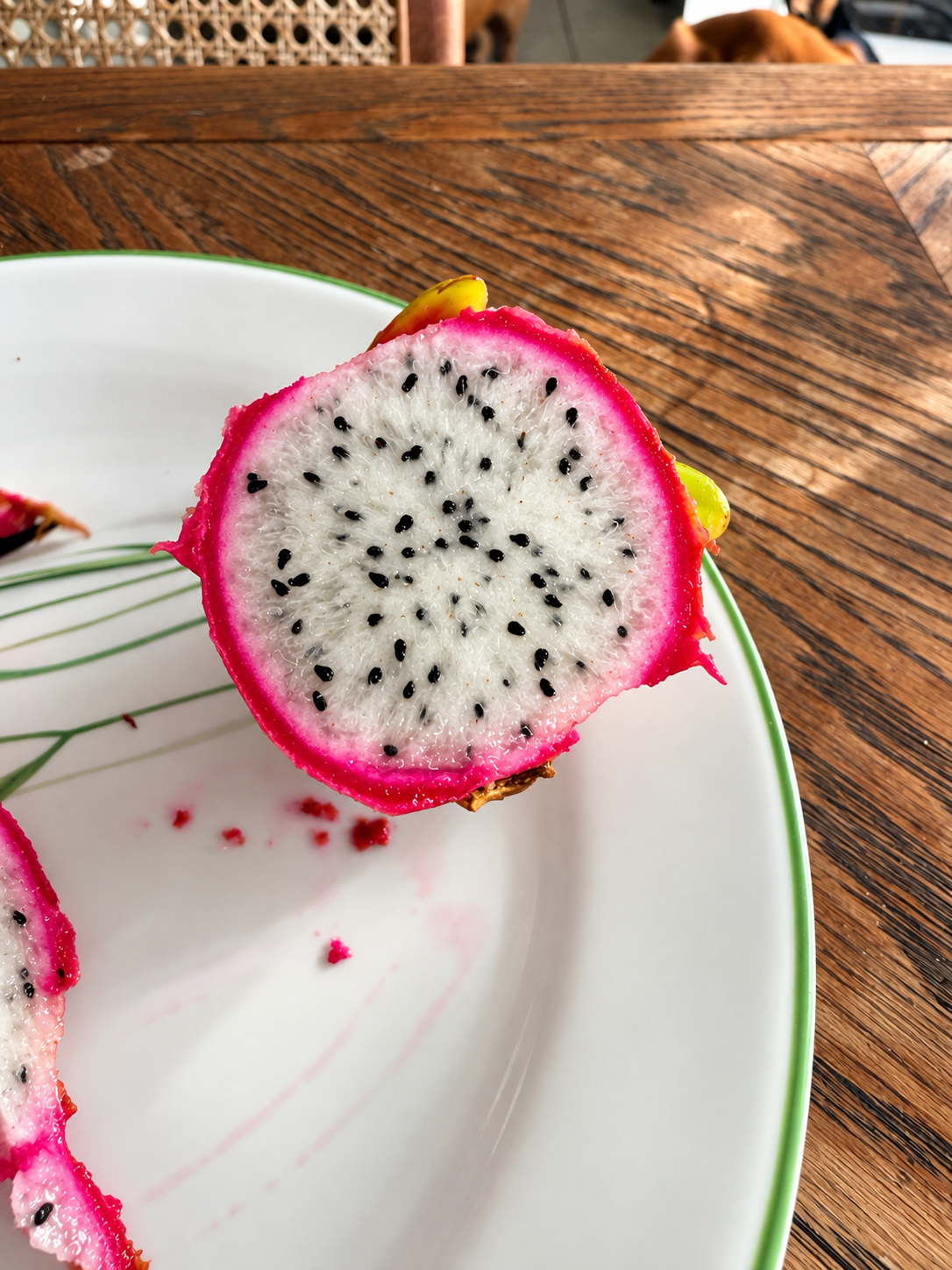
We brought the fruit inside and cut it open while Val told us its history. Beneath that wild pink skin was beautiful white flesh densely scattered with tiny black seeds.
Based on the fruit and plant characteristics, ours appears to be a white-fleshed dragon fruit (Selenicereus undatus, formerly Hylocereus undatus), although after twenty years the exact cultivar name has been lost to time.
Val remembers Greg telling her what variety the original cutting was. She also remembers that, at the time, knowing its name didn't seem particularly important.
Twenty years later, we kind of wish she'd written it down.
There are at least one or two other dragon fruit varieties growing around ʻĀina Iki as well, including one Val remembers as Pink Lady, so hopefully this won't be our last dragon fruit mystery.
For now, though, we grabbed our spoons and dug in.
It was the first fruit from the plant, grown from its first flower, harvested from a cactus that began as a broken eight-inch piece picked up from the ground at a friend's farm nearly twenty years ago.
Truly Slow Food
There's something very ʻĀina Iki about the whole story.
This plant wasn't carefully planted with a ten-year plan. It wasn't pampered into production or even kept in the same place. It was brought home because a friend had a broken piece to share. It lived among the rocks, got dug back up, spent who-knows-how-long languishing in a pot, moved around the property and eventually found a place where it could put down roots and climb.
Then it grew. And grew. And grew some more.
Twenty years later, one flower finally appeared. That flower became one fruit. And that fruit eventually ended up on a plate with three people standing around it, spoons in hand, talking about where it had come from.
That's about as local as food gets.
And while we certainly hope the next dragon fruit doesn't take another twenty years, we have to admit that this one was worth waiting for.
Truly slow food, ʻĀina Iki style. 🐉🌱💗
