
One Toxic Weed at a Time
While Val was off island a handful of months ago, I discovered that I really enjoyed grazing our Biggie herd on one of the two neighboring properties that have been generously allocated for us to use.
We normally call each pasture by the neighbor’s name, but for anonymity purposes, we’ll dub them the front pasture and the side pasture.
I particularly enjoyed taking the Biggies to the front pasture during Val’s vacation because it had become overwhelmed by a plant Val introduced to me as pigweed — one we don’t want the goats eating. So I made it my mission to get as much grazing time in with the herd as possible while she was gone, only I brought my loppers along for the adventure.
The goats grazed. I weeded.
And it turns out I REALLY like weeding.
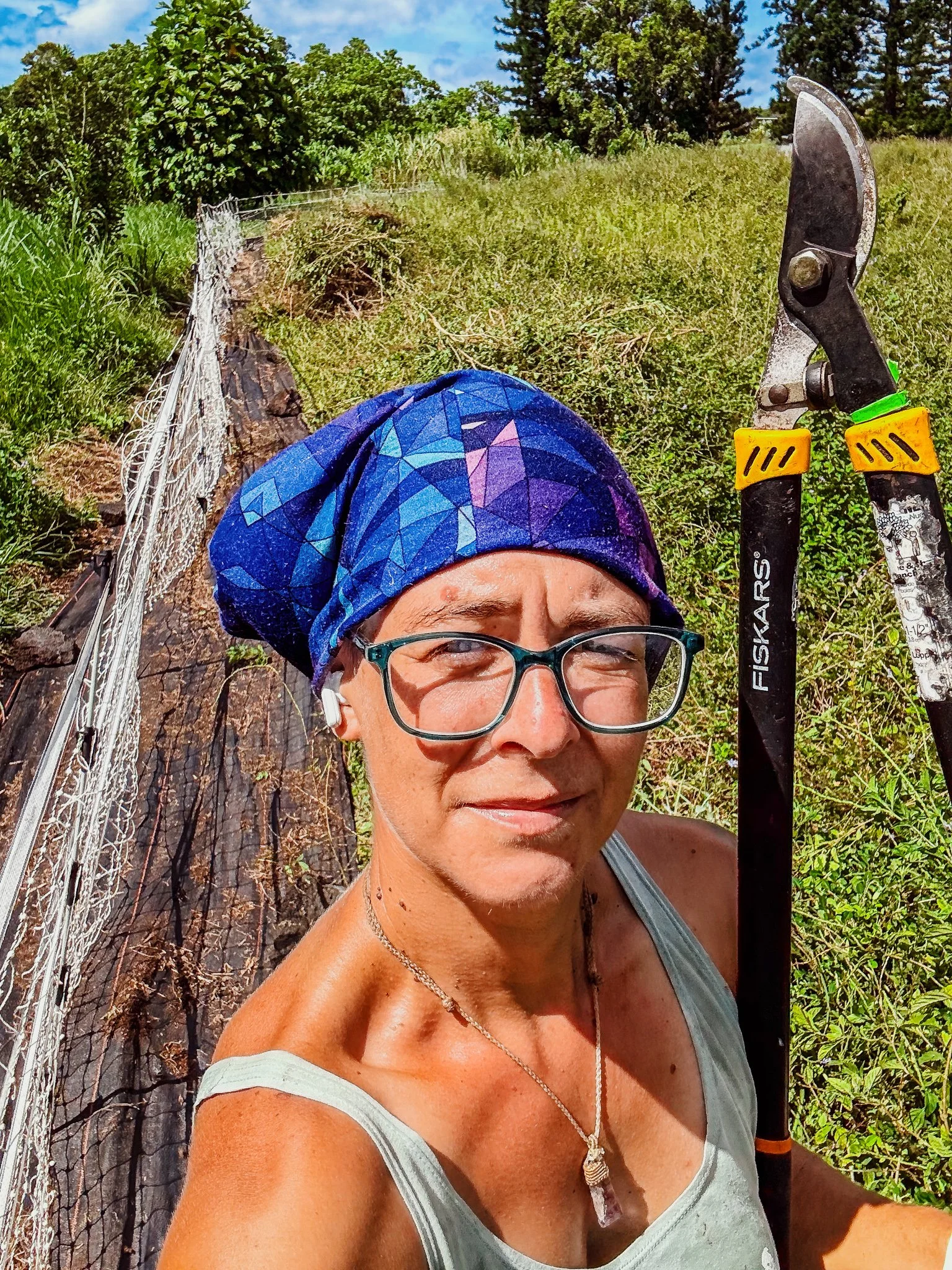
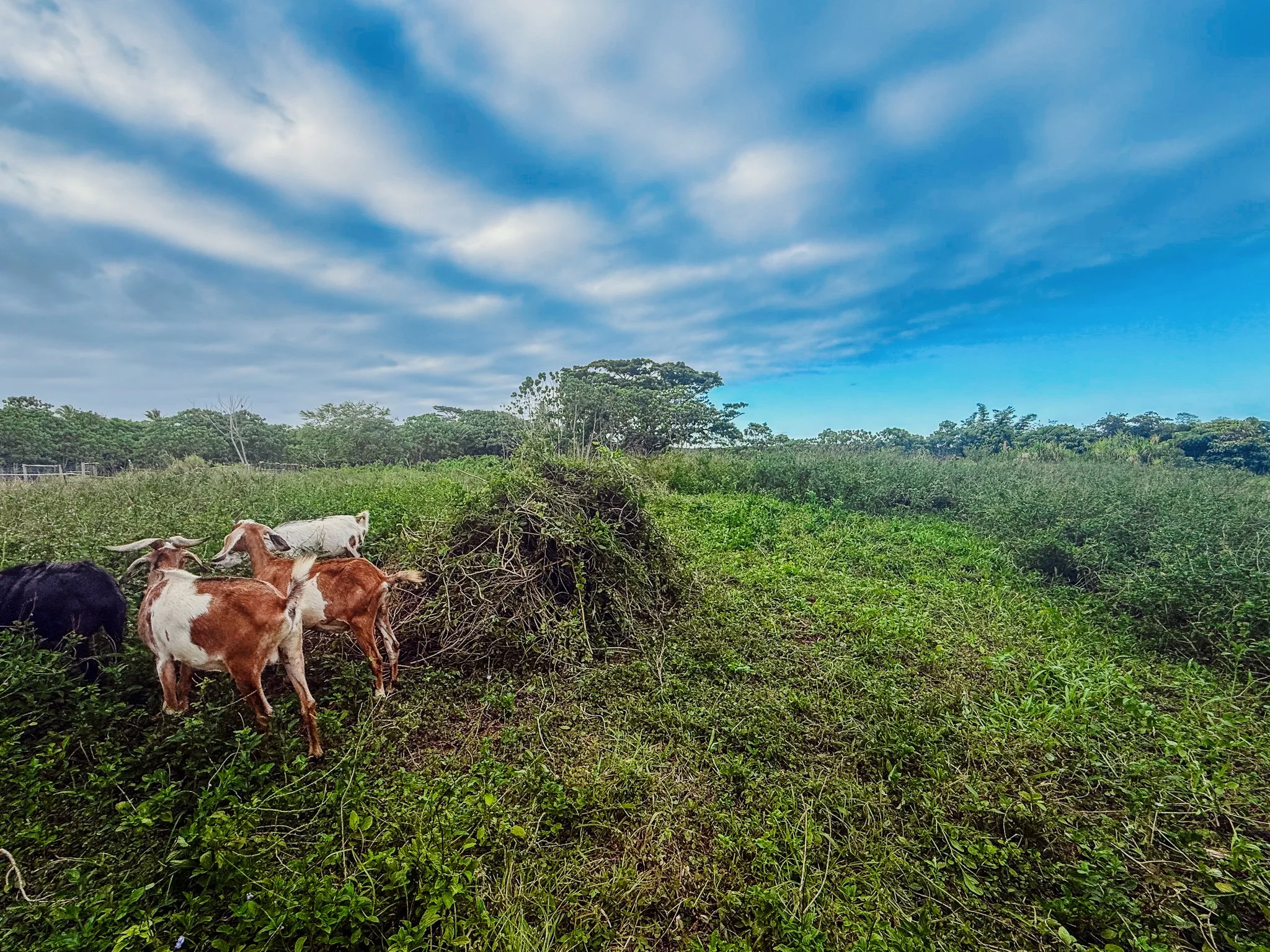
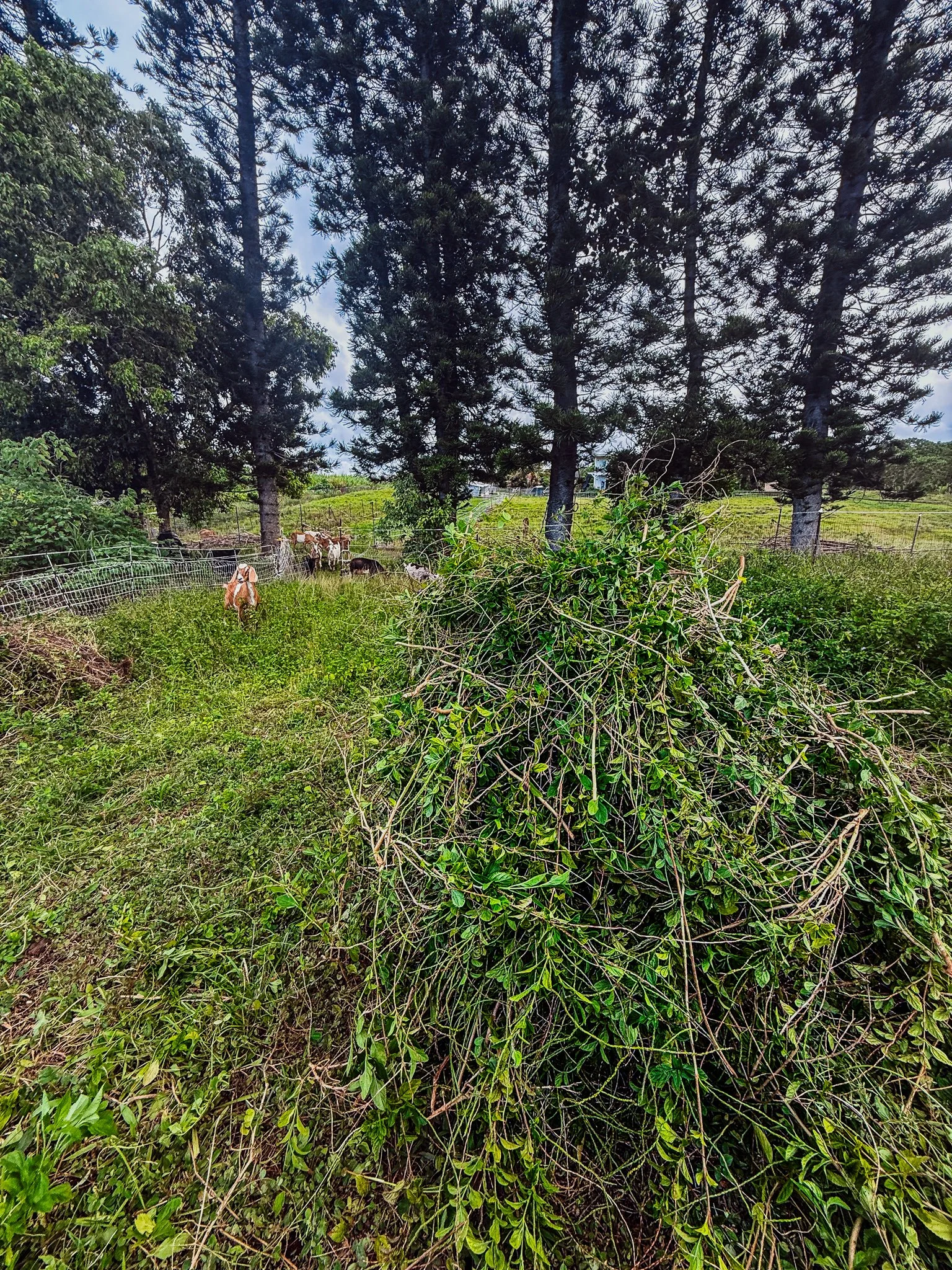
By the time Val returned, I’d made enough progress that she was inspired to keep the momentum going. The three of us spent the next handful of weeks clearing the electric fence line surrounding the pasture. The ultimate goal was to make it safe enough that we could simply open the gate in the mornings and let the Biggies graze on their own without wandering out of bounds and nomming on neighboring fruit trees intended for human consumption.
Eventually, we got there.
For a while, the Biggies had their own little morning buffet.
Then Hansel got sick.
We already suspected he was a bit “under the weather” from parasites, and somewhere along the way he also appears to have helped himself to far more pigweed than we would have liked. He became frighteningly thin. We spent the better part of a month pulling him from the herd every day for medicine, individual attention and a consistent supply of orchard grass pellets while we worked to put weight back on him.
Thankfully, Hansel recovered. But understandably, Val wasn’t terribly enthusiastic about turning everyone loose in a pasture still dotted with a plant we were actively trying to eliminate.
So our foraging focus shifted.
Enter: the side pasture.
Which, naturally, came with its own toxic weed.
This time: Crotalaria.
Before moving to the Big Island, my plant knowledge was minimal at best. I grew up around gardens with my great-grandparents and grandparents, but what I remember most is devouring the delectables that came out of them. My mother was never much of a plant lady, and therefore neither was I.
Coming to ʻĀina Iki has been a crash course in more intellectual fields than I ever expected, and plant life has consistently been one of the most challenging.
I’ve discovered something about myself, though: once Val points out the same plant at least three times, it eventually starts to sink in.
ESPECIALLY when the lesson involves something that needs weeding.
I’m REALLY good at weeding.
With crotalaria, I think it took closer to five lessons.
“This is crotalaria.”
“See this yellow flower?”
“See those pods?”
“This is crotalaria.”
“Yellow flower.”
“Pods.”
By about the fifth iteration, the visual finally lodged itself permanently in my recognition brain box.
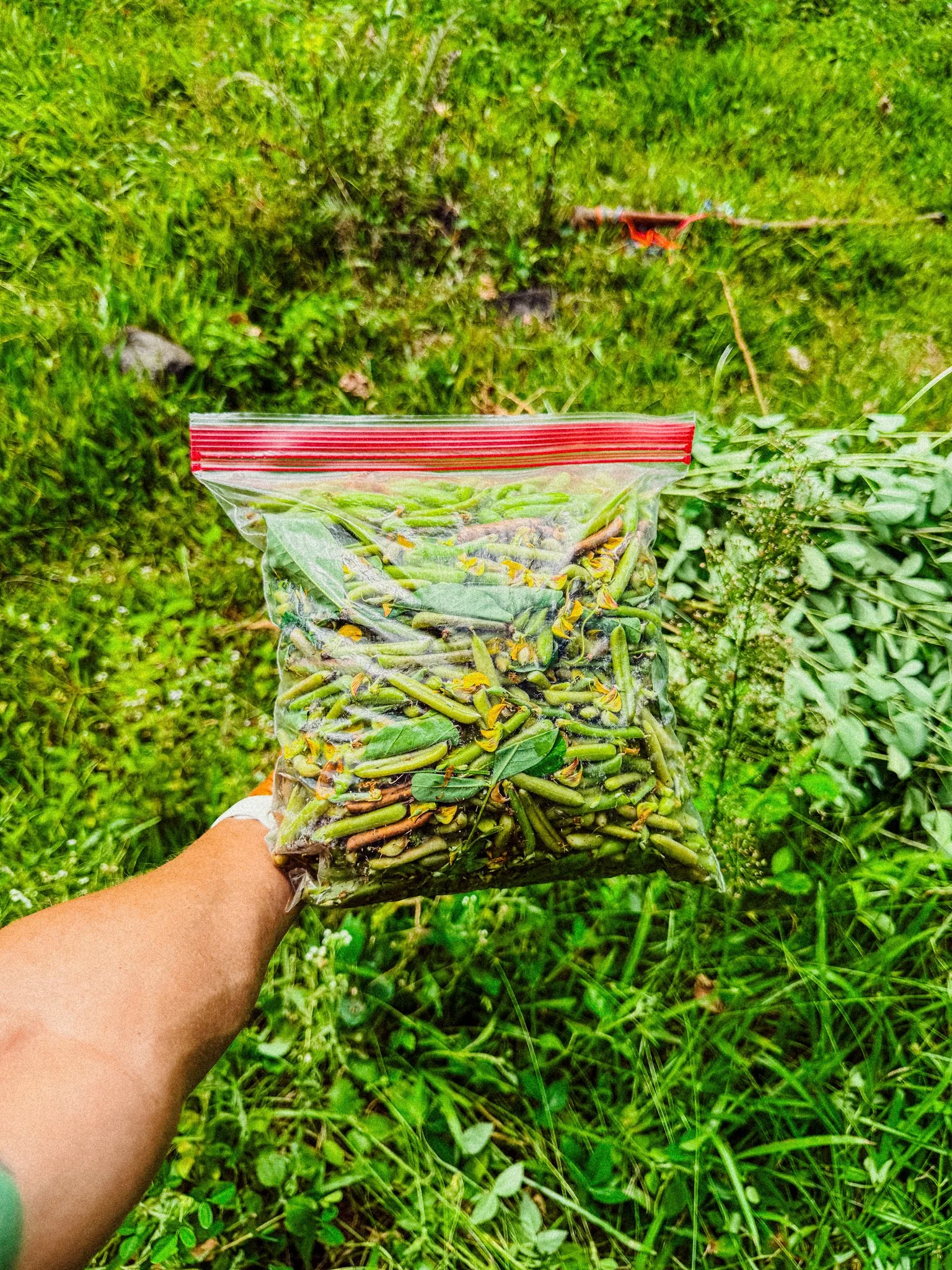
And once you know what you’re looking for, crotalaria is actually pretty easy to spot. Its bright yellow flowers have that distinctive pea-family look to them — which makes sense, because Crotalaria belongs to the legume family. The flowers climb their stalk in little towers of yellow, and as each bloom finishes, it gives way to an elongated green seed pod that looks deceptively like a tiny bean or pea pod.
Cute little toxic green beans.
As those pods mature, seeds develop inside. In some species of crotalaria, a single plant can ultimately produce thousands of seeds, which means ignoring one plant today can potentially mean dealing with a whole lot more of them tomorrow.
And that’s where my newest morning obsession comes in.
I’ve developed a bit of a system.
With the flowers, I start at the bottom of that little tower of blooms, cup my hand loosely around the stem and slide upward. The flowers slip from the stalk as my hand moves and collect right in my palm. One sweep and I’ve got a handful of yellow.
The pods get essentially the same treatment, only with two hands. I cup both hands around the cluster and sweep them up the stalk together, stripping the pods as I go and catching them inside my hands at the same time. They’re bigger and a little more cumbersome than the flowers, so the two-handed approach helps make sure those seed-filled pods end up in my hands rather than scattered into the pasture.
At first, I stuffed everything into my pockets.
My pockets did not keep up.
I’ve now graduated to hauling a two-gallon zip-top bag into the pasture with me.
So while the goats browse around me, I slowly make my way through the grass, scanning for flashes of yellow and those unmistakable little green-bean look-alikes.
Find a stalk. Cup. Sweep. Catch. Into the bag.
Then on to the next.
There’s something ridiculously satisfying about watching that bag slowly fill while the Biggies happily graze around me.
But there’s also a much more important reason for doing it.
Many Crotalaria species contain naturally occurring toxins called pyrrolizidine alkaloids, which can cause liver damage in livestock. One of the particularly concerning things about these compounds is that their effects can be cumulative, meaning repeated exposure can matter even when an animal isn’t consuming a huge amount at one sitting. The seeds of toxic Crotalaria species can be especially problematic.
Goats are famously adventurous eaters, but they’re not magical toxic-plant detectors. When there’s abundant good forage around, they may pass over something unpalatable — but after what we went through with Hansel, “they probably won’t eat it” isn’t a pasture-management strategy we’re terribly interested in testing.
So we remove what we can.
And every flower I sweep into my hand is one that won’t become a seed pod.
Every pod that lands in my bag instead of the grass is a collection of seeds that won’t get the chance to start another plant.
And eventually, once I’ve stripped off everything capable of helping it reproduce, I pull the whole darn plant.
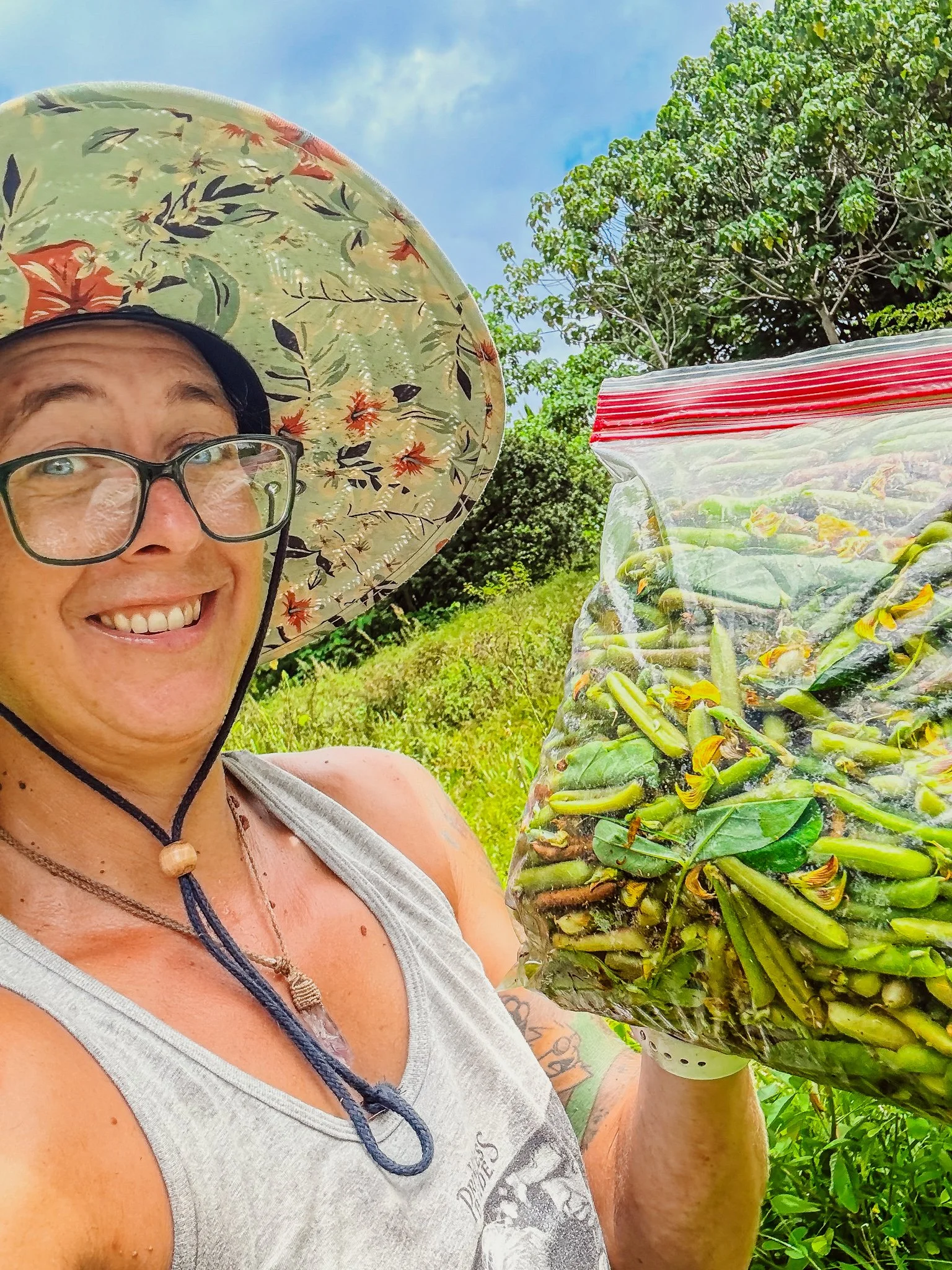
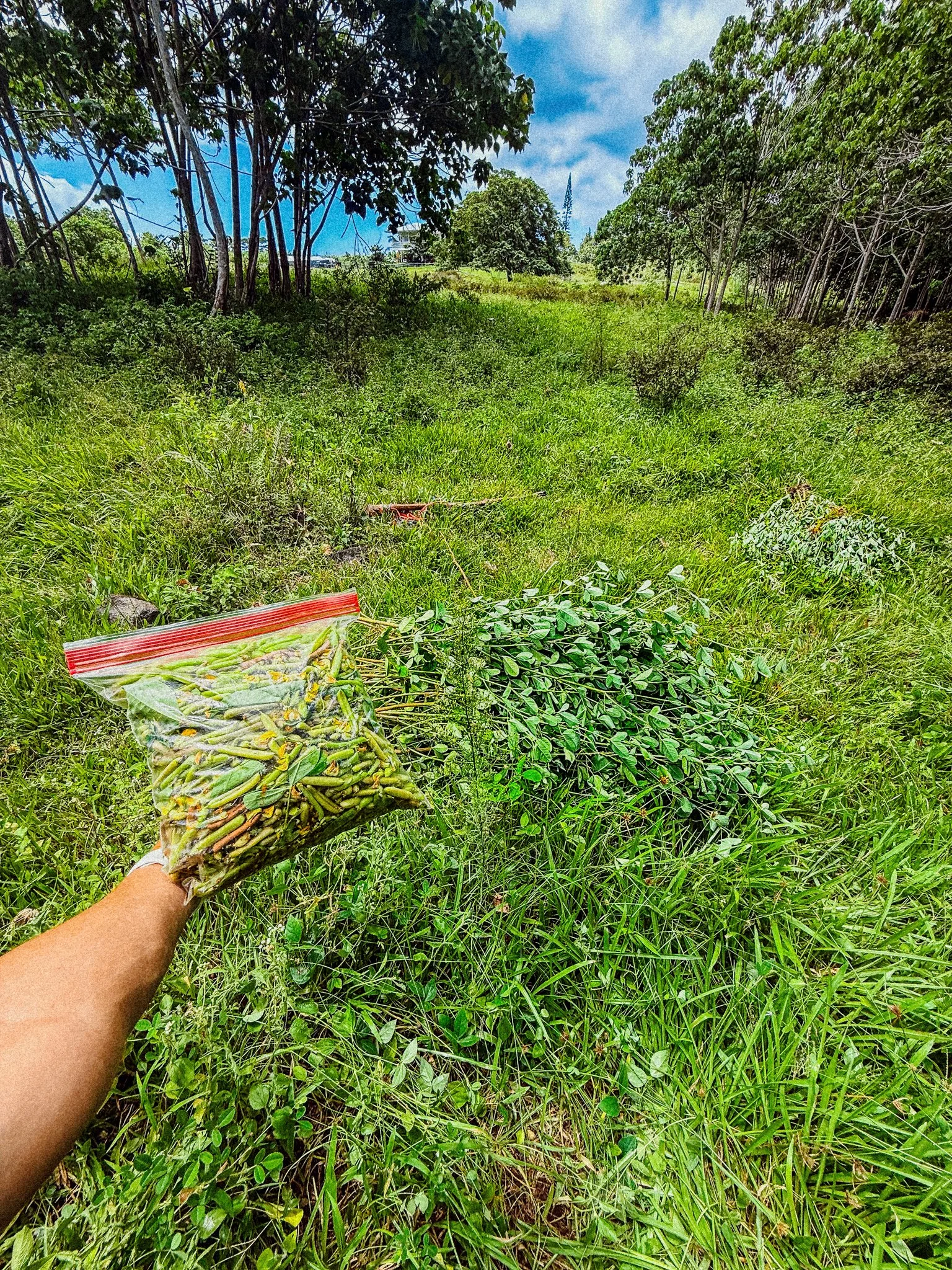
It’s taken me a while to warm up to the plant side of life here at ʻĀina Iki. Animals came naturally. Plants have required considerably more repetition.
I’m grateful for Val’s patience and for the wealth of knowledge she’s always willing to share — and reshare, and reshare once more — until it finally sticks.
And I’m realizing more and more that caring for animals doesn’t always look like what you might imagine.
Sometimes it’s medicine and orchard grass pellets for a skinny goat named Hansel. Sometimes it’s clearing an electric fence line so a herd can safely explore a new pasture. And sometimes it’s walking through knee-high grass in the morning with a two-gallon bag, hunting tiny yellow flowers and funny little green pods while a herd of happy goats grazes around you.
It’s nice to have my morning rituals expanding.
Even nicer knowing how much they’re benefiting our beautiful Biggie herd.
One toxic weed at a time.
