
The Unlikely Life of Pickles
If you read our story about Hurricane Lala, then you already know that one of the hardest losses the storm brought us was Pickles.
What you don’t know is just how unlikely it was that Pickles was ever here for us to lose.
His story began years before Joshua and I arrived at ʻĀina Iki, underneath a gunpowder tree with a mama goat named Blue and a tiny tri-colored baby she wanted absolutely nothing to do with.
So for this Donors Den story, I asked Val to tell me how Pickles came to be.
And as so often happens when you ask Val about one animal, you don’t simply get a birthdate and a few facts.
You get a story.
Before There Was Pickles
After the 2018 eruption, Val was rebuilding the herd.
During that time, she had the opportunity to bring two Nigerian Dwarf goats named Blue and Pinocchio to the ranch. Their previous owner was downsizing her herd, and Val had been searching everywhere for a purebred sire for ʻĀina Iki Ranch.
Blue and Pinocchio were both around five years old when they arrived. They came from much higher elevation, somewhere around 6,000 feet, and neither was particularly interested in human affection.
Pinocchio struggled after arriving at ʻĀina Iki. Val remembers him coming down from the cool elevation with his big coat and immediately panting in the heat.
Eventually, his health declined.
The goat who initially wanted little to do with human touch ultimately died in Val’s arms.
Blue remained far more independent.
But when she was pregnant, Val discovered one way into her heart.
A brush.
“She loved to be brushed,” Val remembers.
Blue was an experienced mother by then. Val remembers being told she had already delivered dozens of babies before coming to ʻĀina Iki.
So when Blue wandered away from the herd one day and settled beneath a gunpowder tree in the big field, Val knew what she was doing.
She gave her space.
And waited.
And Then There Were Two
When Val went down to check on her, Blue had delivered a little chocolate-colored boy named Chaco.
Blue was elated.
She cleaned him. Nurtured him. Mothered him.
Everything was exactly as it should be.
Val went back up toward the house, grabbed a snack and continued watching from a distance.
It looked like Blue might not be finished.
She wasn’t.
A second baby arrived.
A tiny little white, black and brown tri-colored boy.
Pickles.
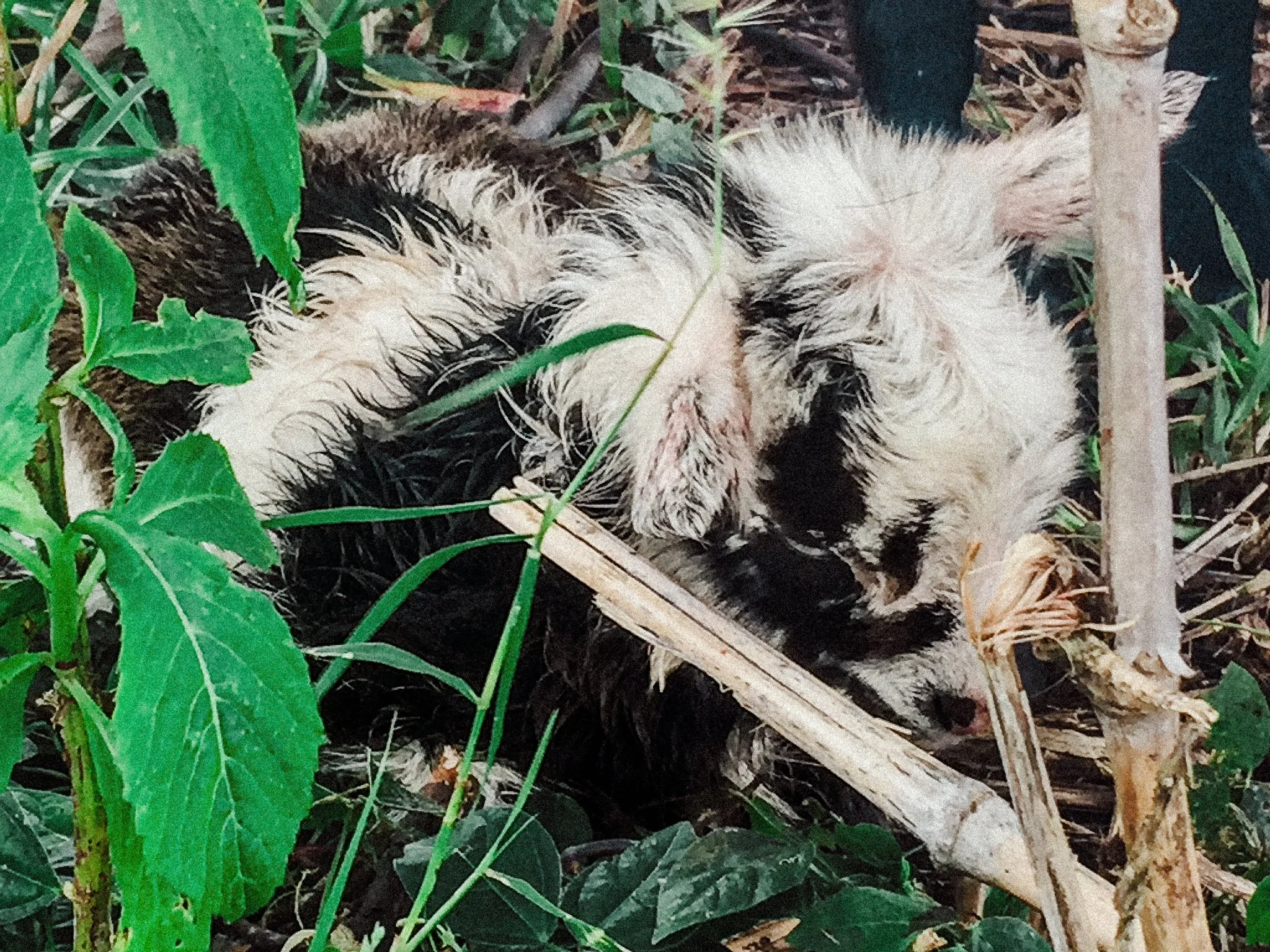
Baby Pickles, only minutes old beneath the gunpowder tree
And Blue wanted nothing to do with him.
She didn’t lick him.
She didn’t clean him.
She wouldn't let him nurse.
While Blue continued doting on Chaco, Pickles lay on the ground beneath the Hawaiian sun.
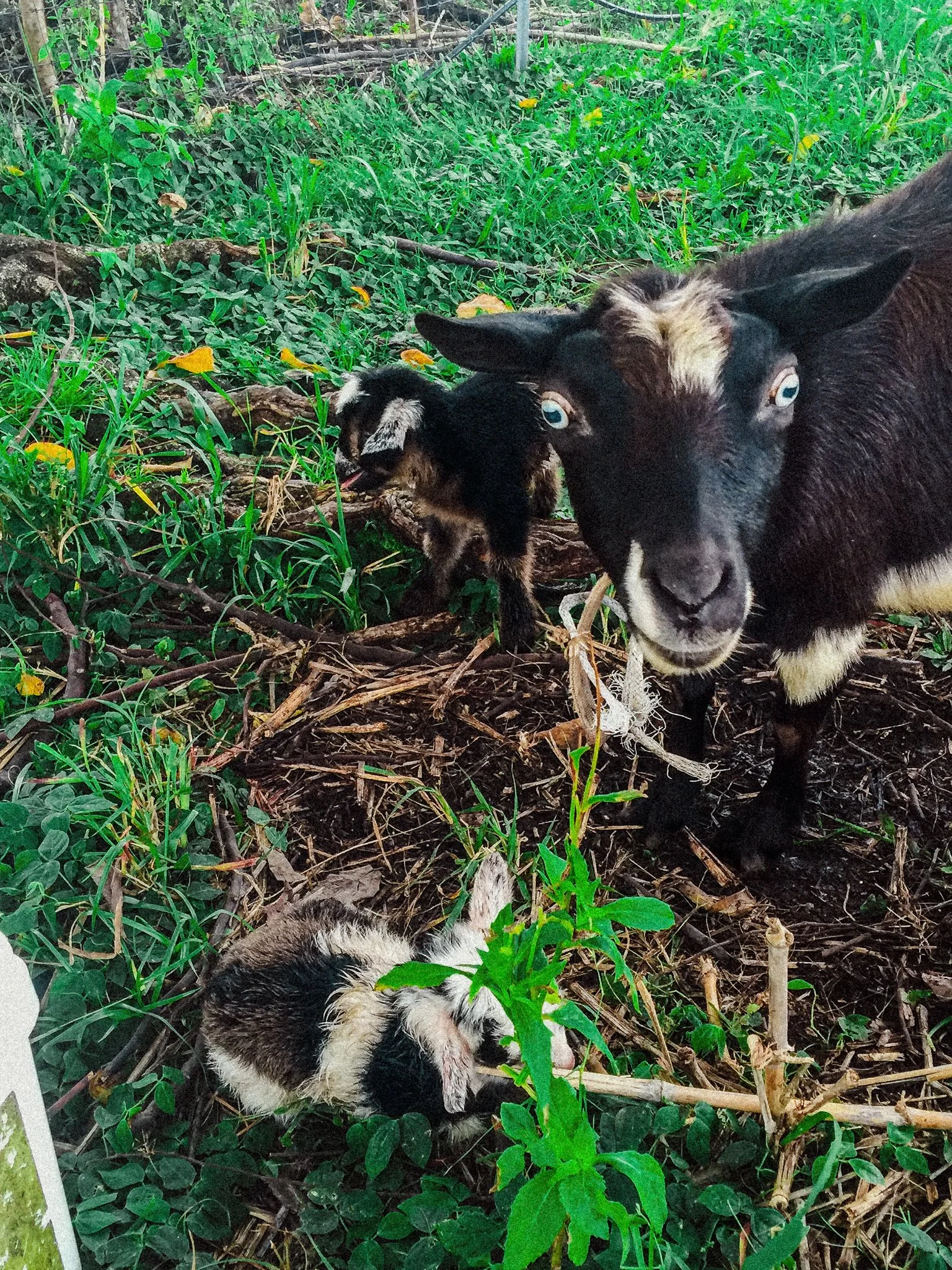
Blue with newborn Chaco and Pickles. From their first minutes together, Val could see that Blue was tending to Chaco while failing to recognize Pickles as her own.
Val tried intervening. She attempted to hold Blue still long enough for Pickles to latch, but Blue kept moving away from him and returning her attention to Chaco.
Eventually Val backed away again.
One more chance.
Maybe if she gave Blue some space, instinct would take over.
Five minutes.
Maybe ten.
When Val returned, Pickles was dying.
Pickles' First Rescue
Val put a collar and leash on Blue and gathered both newborn babies into her arms.
Getting Blue away from the birthing site wasn't easy.
A doe's instincts are intensely connected to the smells and remnants of birth—the blood, fluids and placenta marking the place where her babies arrived. Even though Val physically held both kids in her arms, Blue was reluctant to leave that spot.
So Val dragged Blue toward the barn while carrying her two newborns.
Once everyone was safely contained, one thing became undeniable:
Blue was not going to accept Pickles.
She hadn't cleaned him. She hadn't dried him off. She hadn't stimulated him the way a mother normally would after birth.
But apparently someone else at ʻĀina Iki was willing to take on part of the job.
Luke.
Pickles was only a couple of hours old—if that—when the ranch dog began gently licking and tending to the tiny newborn Blue had rejected.
Blue hadn't cleaned up her baby.
So Luke did. 💚
As sweet as Luke's attention was, there was something he couldn't give Pickles.
Colostrum.
Those first feedings provide a newborn kid with critical antibodies from its mother, and Pickles had received none. He was already dehydrated from lying in the sun, weak from not nursing and had started life without the protection a newborn goat desperately needs.
Someone happened to be visiting the ranch around that time, and Val handed over the tiny baby while she began figuring out how she was going to save him.
She found commercial colostrum.
She found milk.
She made him a little box.
She gave him a hot-water bottle.
And then, as Val remembers it:
“I started praying.”
Pickles had every reason not to survive that first day.
But Pickles apparently hadn't gotten that memo.
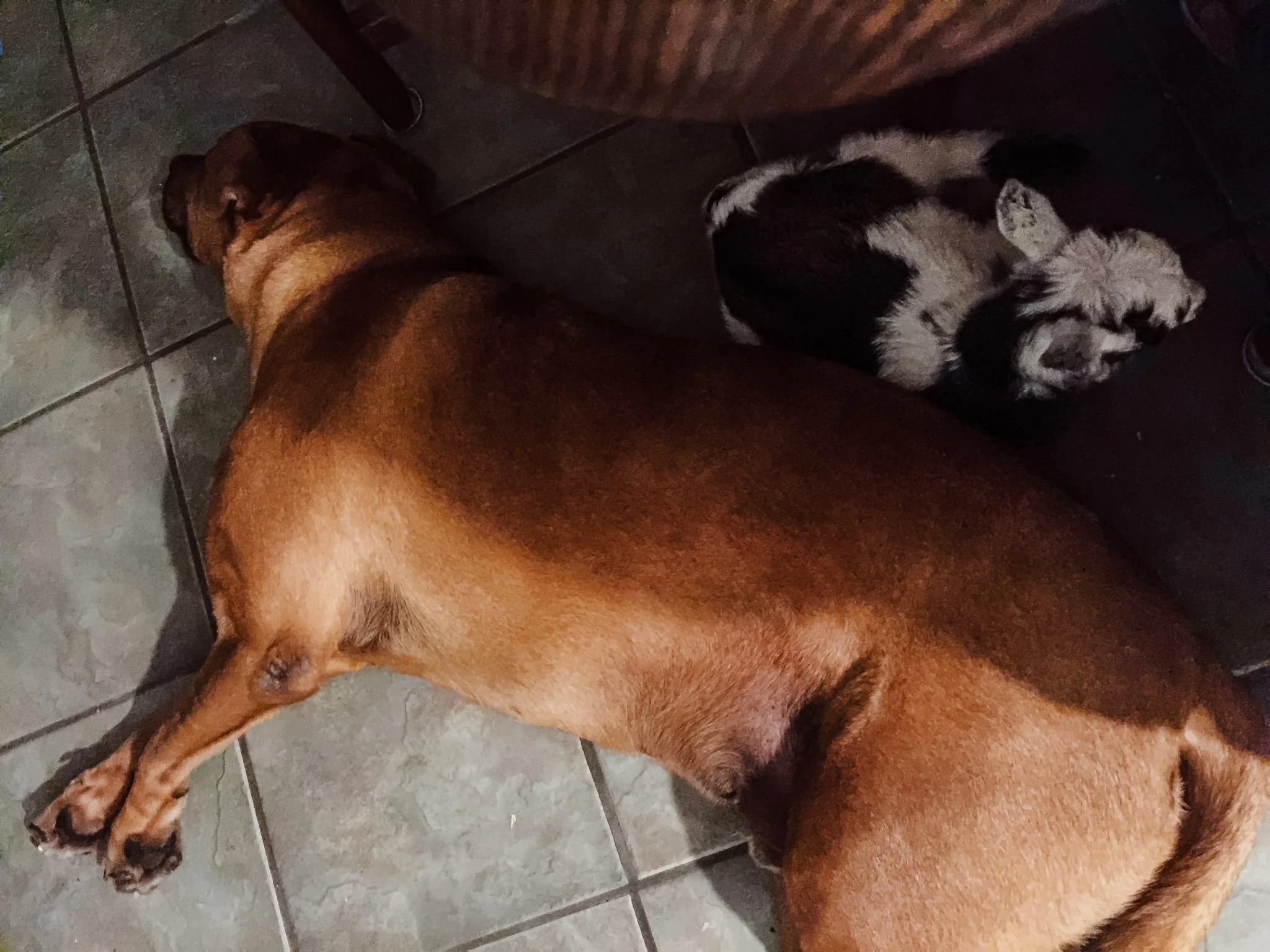
Pickles survived that first day. That night, little Pickles slept beside one of the first souls at ʻĀina Iki to take him under his wing: Luke. 💚
Learning How to Be a Goat
Keeping Pickles alive was only the first challenge.
Now Val had to figure out how to raise him.
She had bottle-raised another kid before Pickles and had watched that goat struggle to integrate with the others. Goats are deeply social animals, and Val didn't want Pickles growing up believing he was a tiny human who happened to have hooves.
So she made a difficult decision.
Pickles would live with the herd.
Even when he wanted to be with her.
He didn't have a mother waiting to nurse him. Blue continued to reject him while accepting and caring for Chaco. Other goats weren't particularly interested in adopting the strange little bottle baby either.
So Pickles learned a different routine.
He stayed with the goats.
And when it was time to eat, Val would call:
“Pickle, pickle, pickle, pickle, pickle!”
And somewhere out in the pasture, a little tri-colored goat would hear her.
Then he'd come racing.
He knew exactly what that sound meant.
Milk.
Food.
And, whether Val wanted to admit it or not, Mom.
He'd eat his bottle and get his cuddles.
Then Val would send him back.
“You've got to be in the herd.”
And eventually, he learned.
He learned how to go back.
He learned how to live among the other goats.
He learned how to be Pickles.
And against the odds that had been stacked against him from his first minutes beneath that gunpowder tree—
Pickles thrived.
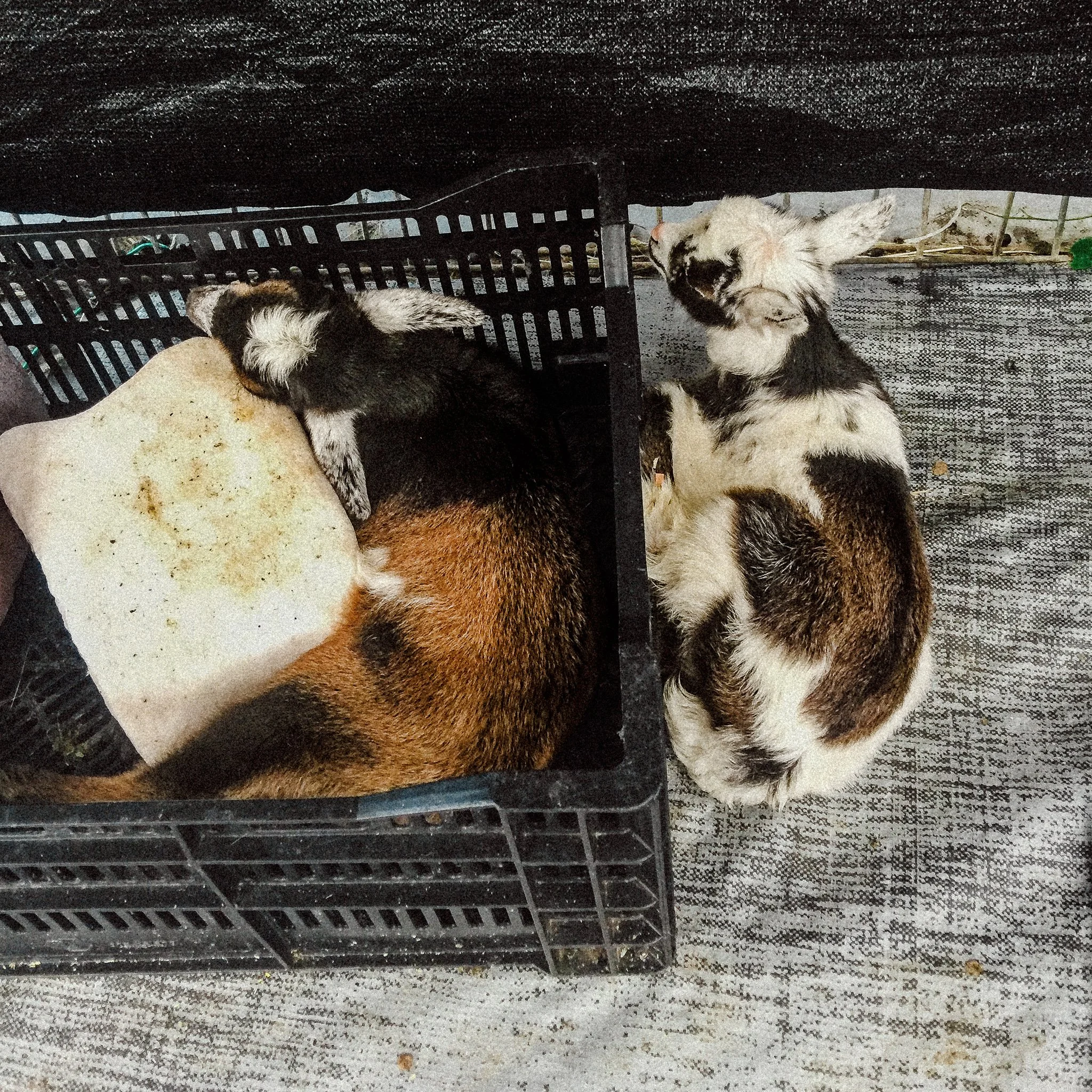
Chaco making himself comfortable in the salt box while little Pickles comes over for a visit.
The Sound of Pickles
Of course, surviving didn't mean becoming normal.
Whatever normal means around here.
Pickles developed his own peculiarities.
One in particular became impossible to ignore.
He would stand beside the metal section of the barn and run his head and horns along the corrugations.
Up.
Down.
Up.
Down.
Creating that unmistakable metallic racket throughout the ranch.
Val came to believe it was Pickles' way of soothing himself—a repetitive sensory behavior that helped this little goat who had started life without his mother find some comfort of his own.
At the time?
It drove her nuts.
But while telling us his story after he died, Val stopped.
“I miss that,” she said.
And maybe that's one of the strangest parts of loving animals.
The things that once made you yell their name across the pasture eventually become the things you would give anything to experience one more time.
One more bang against the barn.
One more strange little Pickles habit.
One more—
“Pickle, pickle, pickle, pickle, pickle!”
—and the sight of him coming.
And He Got to Be a Goat
For all the uncertainty surrounding Pickles' first hours—and Val's worry about whether a rejected, bottle-raised baby would ever truly find his place within the herd—he did.
He grew up.
He found his place.
And he got to spend his years doing exactly what Val had hoped for him from the beginning:
He got to be a goat.
The winter before Joshua and I officially moved to ʻĀina Iki, I photographed Pickles out in the pasture doing just that—playing with one of his herd mates, horns locked together beneath the late-day Hawaiʻi sun.
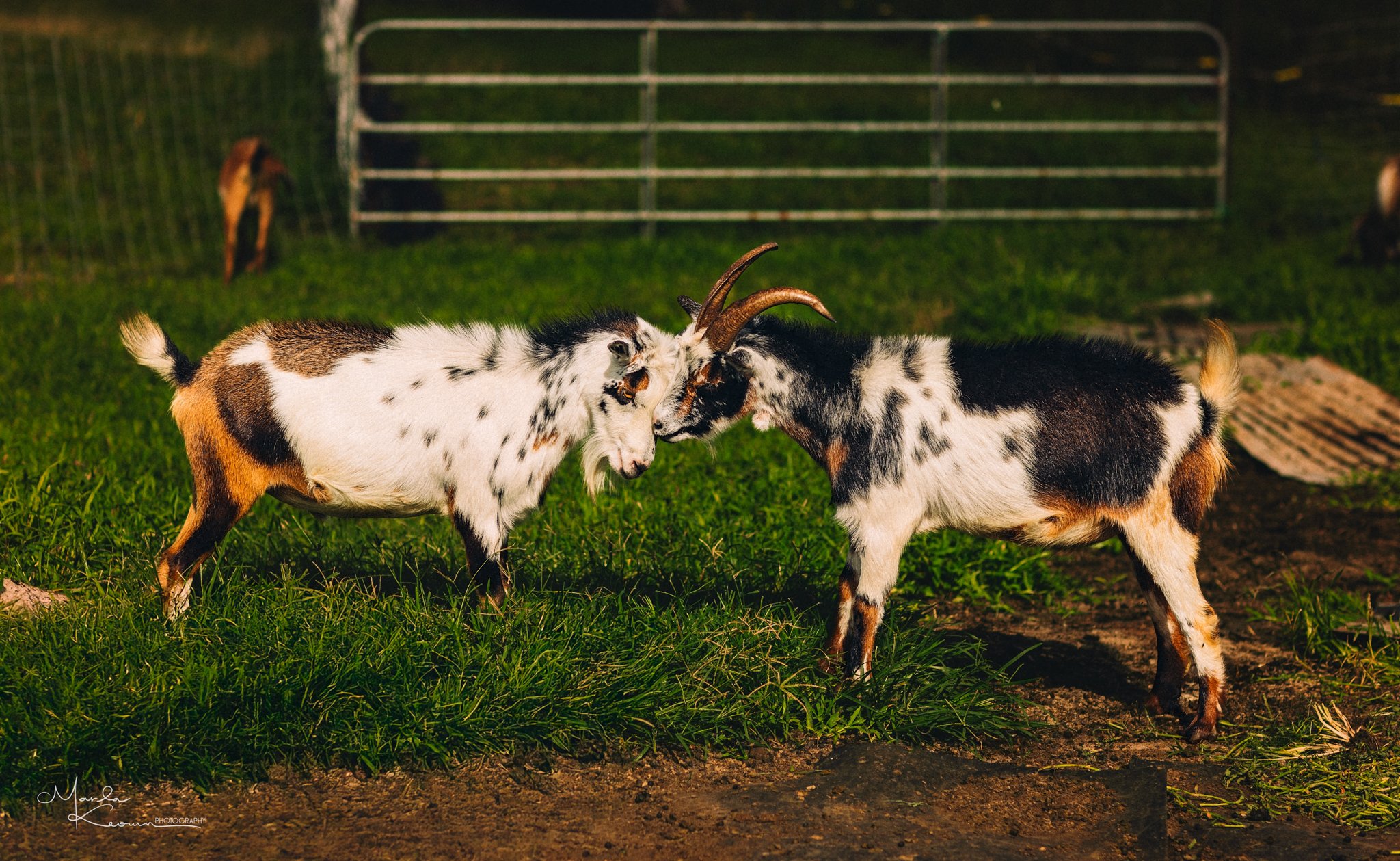
Looking at these photographs now, knowing the story of that tiny baby beneath the gunpowder tree, they mean something entirely different to me.
He wasn't alone.
He wasn't waiting for a bottle.
He wasn't the little rejected baby trying to figure out where he belonged.
He was Pickles.
And he belonged here.
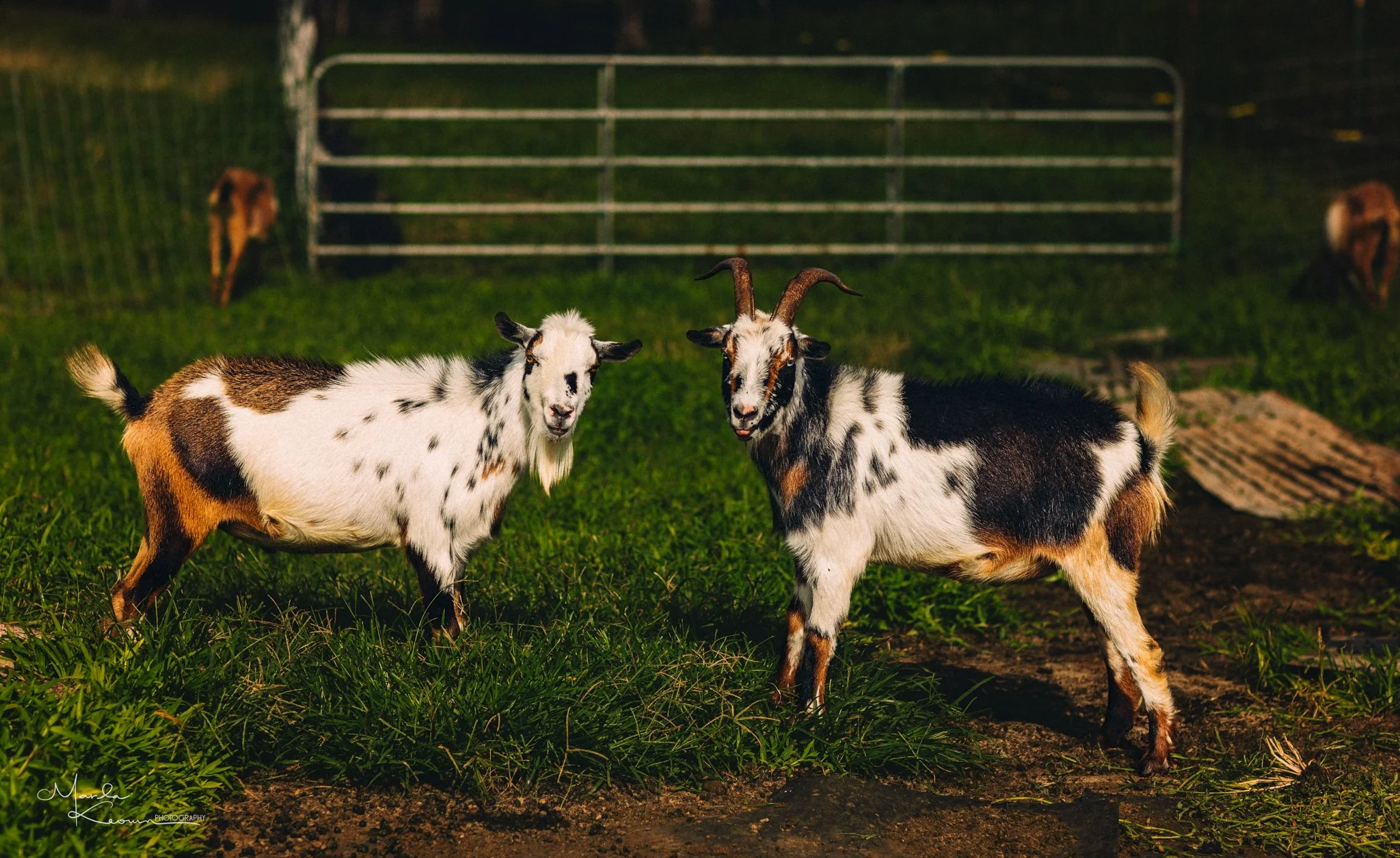
Pickles doing exactly what Val had hoped for him all those years earlier—simply getting to be a goat. Photographed at ʻĀina Iki in the winter of 2025.
One More Fight
In the days before Hurricane Lala reached Hawaiʻi Island, Pickles started fading.
He was losing weight.
His appetite disappeared.
His eyelids became pale.
He stopped enthusiastically grazing with the herd.
And once again, the little goat who had entered this world fighting needed help.
We treated him.
We tempted him with the things he still wanted to eat.
We gave him medicine, supplements and whatever support we could.
And we hoped.
A few days before Lala arrived, Val told me she didn't have high hopes.
So I went to Pickles.
I sat down with him on the dirty goat mats.
He pressed his head into my chest.
And this time, instead of trying to convince myself everything was going to be okay, I let myself understand what might be happening.
I cried.
I pet him.
I loved on him.
And I thanked him for the time I had gotten to share with him.
Full Circle
Saturday morning, Hurricane Lala was arriving.
The wind was up. The rain was coming down. Val and I put on swimsuits and galoshes and prepared Pickles' first medicines of the day.
We were planning to start treating him every hour on the hour.
Medicine in hand, we made our way to the Biggies' barn.
Val entered his separated corridor ahead of me.
Then she stopped.
She reached her hand backward for mine.
Before she said anything, I knew.
Pickles had passed.
The little baby who wasn't supposed to survive his first day had made it years beyond that afternoon beneath the gunpowder tree.
He had survived rejection.
He had survived dehydration.
He had survived starting life without his mother's colostrum.
He had learned to take a bottle.
He had learned to live with a herd that wasn't quite sure what to do with him.
He had learned that when somebody called “Pickle, pickle, pickle!” he could come racing home.
He had grown up.
He had become part of ʻĀina Iki.
And eventually, he had grown old enough for me to know him, too.
I can't help but feel that his timing was one final Pickles gift.
Within hours, we would be running between shelters in pouring rain and heavy winds, checking animals, moving them when necessary, wringing out our swimsuits, putting on dry clothes and doing it all over again.
I can't imagine trying to give Pickles medicine every hour through the middle of that storm.
Maybe he knew.
Maybe he didn't.
But I like believing that the little goat who needed so much help entering this world chose to make leaving it a little easier on us.
There will be other goats in the Biggies' barn.
There will be other babies born at ʻĀina Iki.
There will be other animals who need medicine in the middle of storms, other impossible cases we try desperately to save, and inevitably other goodbyes we aren't ready to make.
That's part of this life.
But there will only ever have been one Pickles.
And somewhere in the quiet of the barn, I think we're going to be listening for the sound of those horns running along the corrugated metal for a very long time.
In Loving Memory of Pickles
May 3, 2022 — August 15, 2026
From a tiny tri-colored baby who wasn't expected to survive his first day, to a wonderfully quirky and deeply loved member of the ʻĀina Iki herd.
4 years, 3 months, 12 days.
What a gift those extra days became. 💚
